
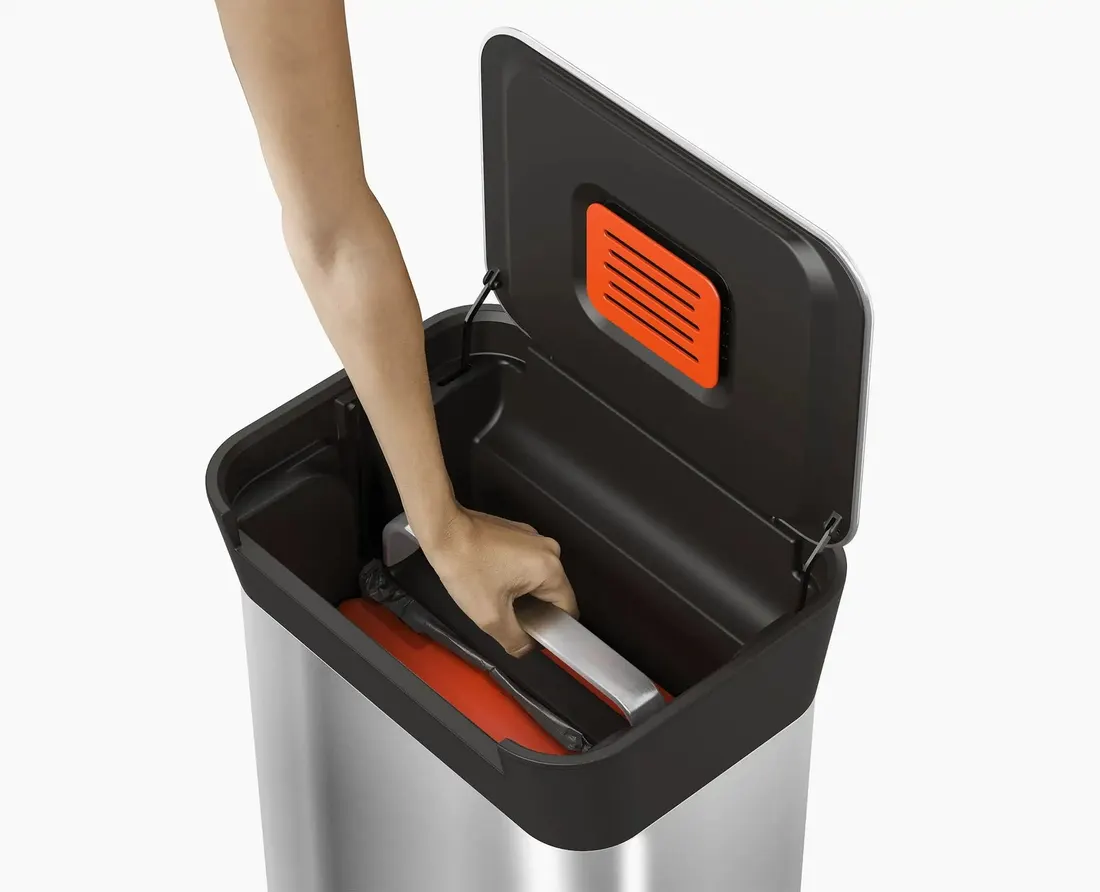
A compacting bin only earns its place if what goes into it actually compacts. The Joseph Joseph Titan 30L is built around a simple idea: a hand-pushed handle with two plates flattens the rubbish in the liner, so the 30-litre compartment can hold up to 90 litres of general household waste. That figure depends heavily on what you throw away.
Here is a practical look at what squashes well, what doesn’t, and how to get the most out of each liner without straining the bin.
Why mixed rubbish compacts so well
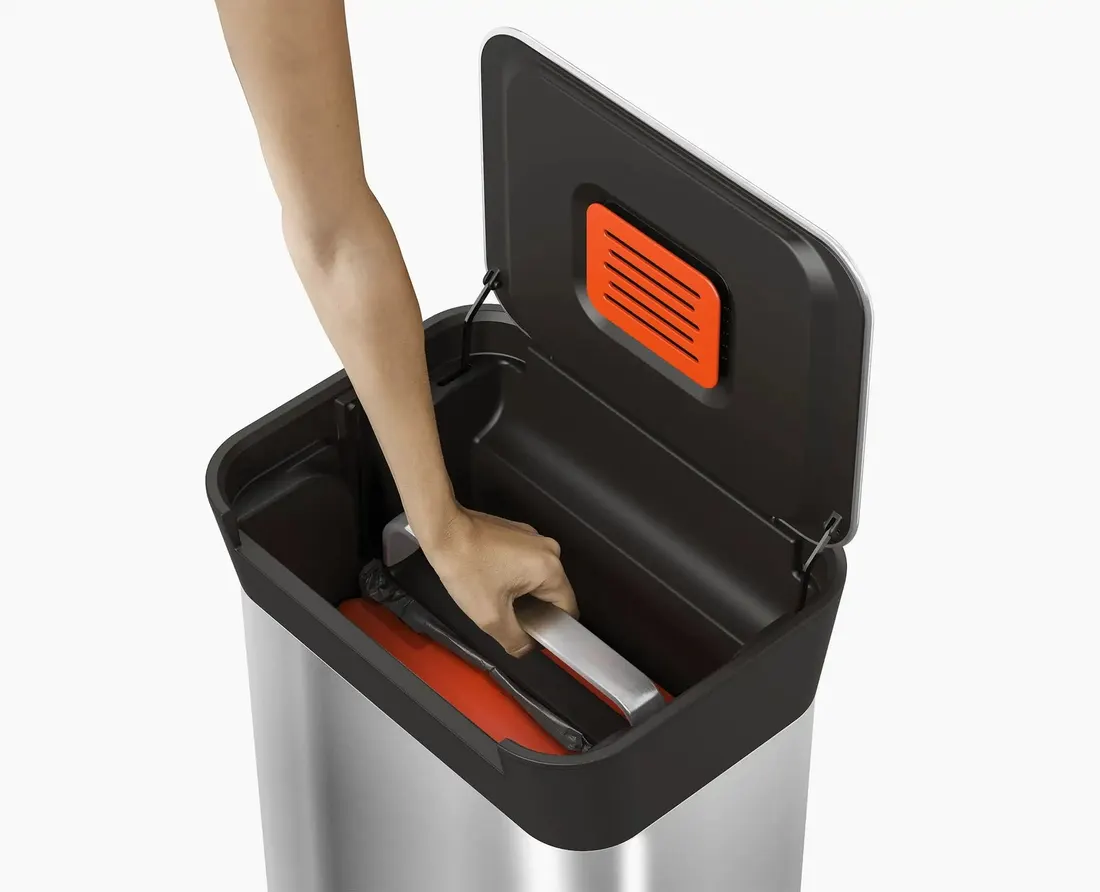
A lot of what fills a kitchen bin is air. Crisp packets, food trays, paper towels, loosely scrunched film and the odd cardboard sleeve all take up far more space than their weight suggests. When you press the Titan’s handle down, the plates push that air out and the waste settles into the bottom of the bag.
Joseph Joseph’s “up to 90 litres” claim and its “empty three times less often” line both refer to general mixed waste. That’s the everyday mix of soft packaging, food scraps and paper that fills most kitchen bins.
What usually compacts well
- Soft plastic packaging, wrappers and film
- Paper towels, tissues and napkins
- Thin card such as cereal box inners or sleeves (if you aren’t recycling them)
- Food waste mixed in with the above
- Light plastic trays that bend when pressed
What doesn’t compress the same way
Joseph Joseph’s instructions point out that rigid recyclables such as glass or plastic bottles don’t compact in the same way. Pressing down on a glass jar doesn’t make it smaller. A sturdy plastic bottle with its lid on mostly springs back. If your bin is mainly rigid items, you’ll fit noticeably less than 90 litres.
A few other things are worth keeping out of the compacting bin, for your own sake as much as the bin’s:
- Glass: it won’t compress, and pushing down on it risks breaking it inside the bag.
- Sharp items: broken crockery, tins with jagged lids and similar objects can pierce the liner when pressed.
- Large, solid lumps: anything that doesn’t give will stop the plates moving evenly.
If you separate recycling, the Titan works well as the general waste bin alongside it. Your recyclables go where your local council wants them, and the compacting bin takes the soft, bulky rubbish it was designed for.
How to compact for the best results
The process is simple, but a few habits help:
- Press little and often. Compact whenever the bin starts to look full, rather than waiting until it is overflowing. Smaller loads flatten more evenly.
- Push firmly, not violently. A steady push down on the handle is enough. Joseph Joseph says the mechanism was tested more than 100,000 times against repeated downward force, but that’s no reason to jump on it.
- Return the handle to rest. Fold it back inside the rim and let the lid close, so it’s ready for next time.
- Know when to stop. When pressing no longer makes much difference, take the bag out.
Don’t over-compact
That last point matters. The instruction booklet warns that compacting a very full liner again and again can damage the bin. Once the bag is dense and the plates barely move, it’s time to empty it. Squeezing in one more load isn’t worth the strain on the mechanism or the liner.
The liner makes a difference
When you press down, the anti-tear bag grips under each compaction plate hold the liner taut so it isn’t stretched, ripped or pinched. That only works if the liner is fitted properly:
- Open out the liner and place it loosely in the compartment.
- Lift the front compaction plate and tuck the front edge of the bag into the grips at both ends.
- Lift the rear plate and tuck the back edge into the grips at both ends.
- Close the lid.
Joseph Joseph recommends its custom-fit IW4 liners, which the booklet lists as extra strong with drawstring handles, in packs of 20. The listing also says standard bags work. A compacted bag is denser and heavier than a loose one, so a sturdier liner is the safer choice if you fill yours right up. Our how-to-use section shows the full sequence step by step.
A heavier bag to carry
One thing new owners notice: because the bag holds more, it weighs more when you lift it out. Three loads of rubbish in one liner means one trip to the outside bin instead of three, but that one trip is heavier. Lift with the drawstring handles if you use IW4 liners, and avoid swinging a full bag by one corner.
Smells and longer gaps between emptying
Emptying less often means food waste sits in the bin for longer. The Titan has a replaceable activated carbon filter in the lid to reduce odours. The instruction booklet suggests replacing it every three months, and refills come in packs of two. If your household throws away a lot of food scraps, it may still be sensible to empty more often in warm weather.
If the Titan sounds like a fit for the way your household throws things away, you can check today’s price and delivery terms on the official Joseph Joseph store.
Affiliate link: we may earn a commission if you buy, at no extra cost to you. See our disclaimer.